EVALV: Designing Access for On-Demand EV Charging
EVALV: Designing Access for On-Demand EV Charging
EVALV: Designing Access for On-Demand EV Charging
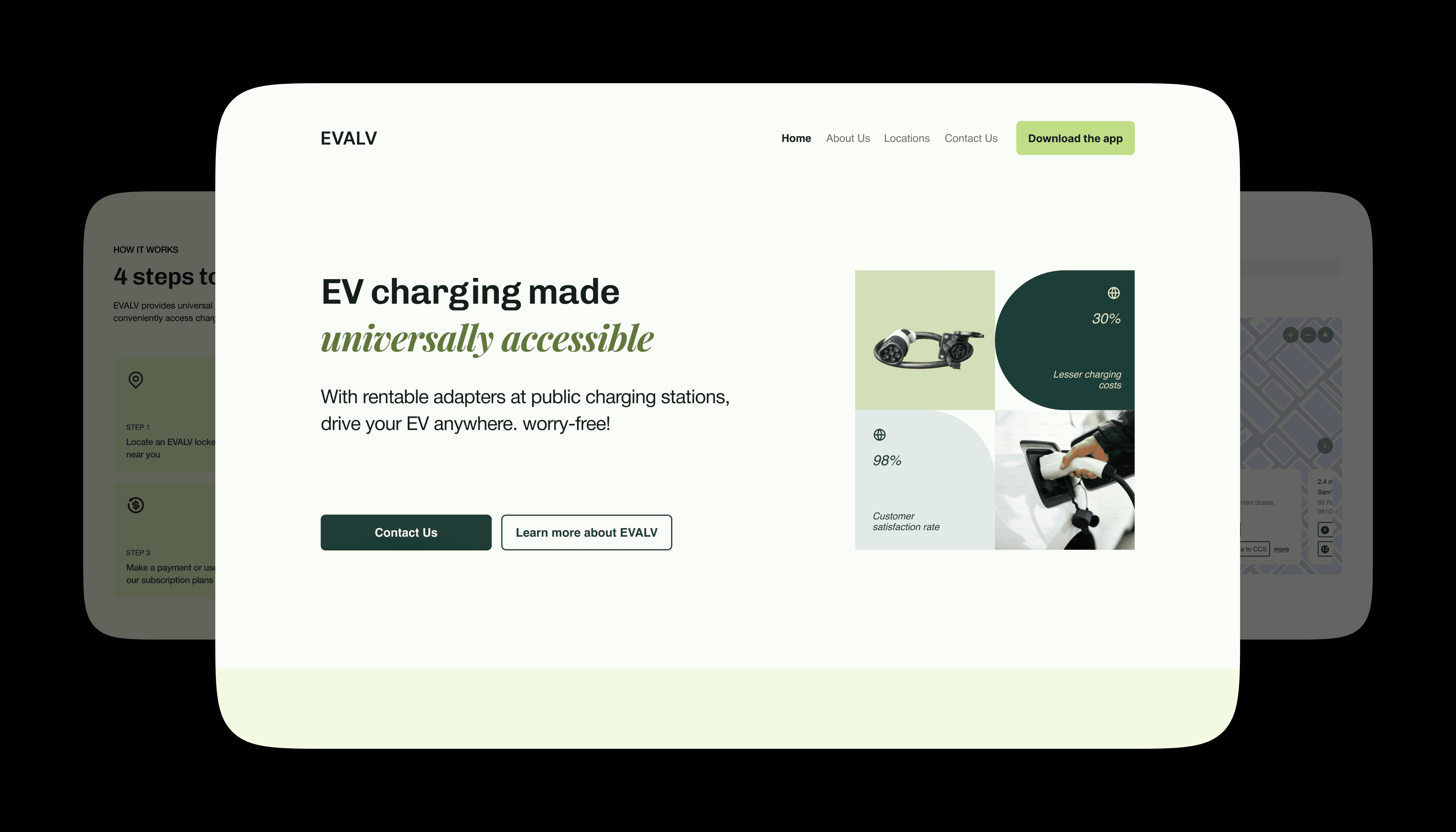
About
My Role
UX Designer
Platform
Website
Responsibilities
User Research | UX Design
Timeline
June 2024 - August 2024
Team
Yechan Choi (UX Researcher)
Gily Chiang Yu (UX Designer)
Aashika Ashok (UX Designer)
Anita Nwude-Chenge(UX Designer)
“Like myself, many of you own a mobile phone. I'm even more certain that a good portion of folks who nodded in agreement have let that cell-phone battery die. Now, as one can imagine, it is frustrating to not be able to capture an amazing picture, or access one's virtual boarding pass. Now, what if this same scenario happened to your Electric Vehicle?”
~ Ashley Vaughn | Founder, Evalv
“Like myself, many of you own a mobile phone. I'm even more certain that a good portion of folks who nodded in agreement have let that cell-phone battery die. Now, as one can imagine, it is frustrating to not be able to capture an amazing picture, or access one's virtual boarding pass. Now, what if this same scenario happened to your Electric Vehicle?”
~ Ashley Vaughn, Founder
EV adoption continues to grow, but charging infrastructure remains fragmented. Different charging networks and connector types often require EV owners to carry adapters, which can be expensive and difficult to access when needed.
This friction becomes more pronounced for drivers who rely on public charging or travel across different charging networks.
Evalv aims to address this gap through on-demand rental adapters stored in lockers at public charging stations, allowing drivers to access the adapter they need when they need it.
The Context
EV adoption continues to grow, but charging infrastructure remains fragmented. Different charging networks and connector types often require EV owners to carry adapters, which can be expensive and difficult to access when needed.
This friction becomes more pronounced for drivers who rely on public charging or travel across different charging networks.
Evalv aims to address this gap through on-demand rental adapters stored in lockers at public charging stations, allowing drivers to access the adapter they need when they need it.
EV adoption continues to grow, but charging infrastructure remains fragmented. Different charging networks and connector types often require EV owners to carry adapters, which can be expensive and difficult to access when needed.
This friction becomes more pronounced for drivers who rely on public charging or travel across different charging networks.
Evalv aims to address this gap through on-demand rental adapters stored in lockers at public charging stations, allowing drivers to access the adapter they need when they need it.
EV adoption continues to grow, but charging infrastructure remains fragmented. Different charging networks and connector types often require EV owners to carry adapters, which can be expensive and difficult to access when needed.
This friction becomes more pronounced for drivers who rely on public charging or travel across different charging networks.
Evalv aims to address this gap through on-demand rental adapters stored in lockers at public charging stations, allowing drivers to access the adapter they need when they need it.
The challenge was designing a website that introduces this unfamiliar model and helps people quickly understand how it works.
The challenge was designing a website that introduces this unfamiliar model and helps people quickly understand how it works.
The Design Challenge
Because the adapter rental model is unfamiliar to most EV drivers, the website needed to answer three questions quickly:
How does Evalv help solve adapter access at the moment of need?
How does the rental process work?
Why is renting better than owning for this use case?
Because the adapter rental model is unfamiliar to most EV drivers, the website needed to answer three questions quickly:
How does Evalv help solve adapter access at the moment of need?
How does the rental process work?
Why is renting better than owning for this use case?
Because the adapter rental model is unfamiliar to most EV drivers, the website needed to answer three questions quickly:
How does Evalv help solve adapter access at the moment of need?
How does the rental process work?
Why is renting better than owning for this use case?
The goal was not just to present a company website, but to translate a new infrastructure concept into something drivers could immediately understand and trust.
The goal was not just to present a company website, but to translate a new infrastructure concept into something drivers could immediately understand and trust.
Understanding Business Constraints
Conversations with Evalv’s CEO and CTO helped clarify both the technical constraints and business priorities behind the service.
Key considerations included:
Limited early infrastructure meant the site needed to set clear expectations around where the service was available.
Inventory variability meant the experience had to build confidence in how the system would work when adapters were needed.
Reliability at the moment of need meant the site had to make the service feel trustworthy, understandable, and easy to use.
Conversations with Evalv’s CEO and CTO helped clarify both the technical constraints and business priorities behind the service.
Key considerations included:
Limited early infrastructure meant the site needed to set clear expectations around where the service was available.
Inventory variability meant the experience had to build confidence in how the system would work when adapters were needed.
Reliability at the moment of need meant the site had to make the service feel trustworthy, understandable, and easy to use.
Conversations with Evalv’s CEO and CTO helped clarify both the technical constraints and business priorities behind the service.
Key considerations included:
Limited early infrastructure meant the site needed to set clear expectations around where the service was available.
Inventory variability meant the experience had to build confidence in how the system would work when adapters were needed.
Reliability at the moment of need meant the site had to make the service feel trustworthy, understandable, and easy to use.
These constraints shaped how the service needed to be communicated through the website.
These constraints shaped how the service needed to be communicated through the website.
Understanding EV Charging
To understand when adapter access becomes a real point of friction for EV drivers, we surveyed over 150 respondents, most of whom were current EV owners. The goal was to understand when these problems surface, how urgent they feel, and what would make a service like Evalv feel trustworthy and useful in those moments.
Adapter needs are infrequent, but high-stakes: Drivers often realize they need an adapter only after reaching an incompatible station.
Compatibility remains unclear: Different connector standards across vehicles and networks create uncertainty at the point of charging.
Charging situations are often time-sensitive: Adapter needs frequently arise during low-battery situations or long-distance travel, making clarity and trust especially important.
To understand when adapter access becomes a real point of friction for EV drivers, we surveyed over 150 respondents, most of whom were current EV owners. The goal was to understand when these problems surface, how urgent they feel, and what would make a service like Evalv feel trustworthy and useful in those moments.
Adapter needs are infrequent, but high-stakes: Drivers often realize they need an adapter only after reaching an incompatible station.
Compatibility remains unclear: Different connector standards across vehicles and networks create uncertainty at the point of charging.
Charging situations are often time-sensitive: Adapter needs frequently arise during low-battery situations or long-distance travel, making clarity and trust especially important.
Survey Insights
Survey Insights

These insights suggested that the website should focus less on features and more on clarity and reassurance.
These insights suggested that the website should focus less on features and more on clarity and reassurance.
The Users
The service primarily needed to support:
• EV drivers traveling across unfamiliar charging networks
• Urban drivers without access to home charging
• Potential EV buyers hesitant about charging infrastructure
The service primarily needed to support:
• EV drivers traveling across unfamiliar charging networks
• Urban drivers without access to home charging
• Potential EV buyers hesitant about charging infrastructure
This helped guide the messaging and information hierarchy of the site.
This helped guide the messaging and information hierarchy of the site.
Information Architecture
Because the service model was unfamiliar, the information architecture prioritized clarity through sequence. The site first introduced the problem and Evalv’s value, then explained how the rental process works, and finally guided users toward locations, pricing, and next steps.
Because the service model was unfamiliar, the information architecture prioritized clarity through sequence.
The site first introduced the problem and Evalv’s value, then explained how the rental process works, and finally guided users toward locations, pricing, and next steps.
Sitemap
Sitemap

This structure ensured users could quickly understand the service before exploring details like locations and pricing.
This structure ensured users could quickly understand the service before exploring details like locations and pricing.
Translating the System Into an Interface
Because the service model was unfamiliar, the visual and interaction design focused on making the rental process feel clear, trustworthy, and easy to follow.
Key design decisions included:
Step-based explanation:
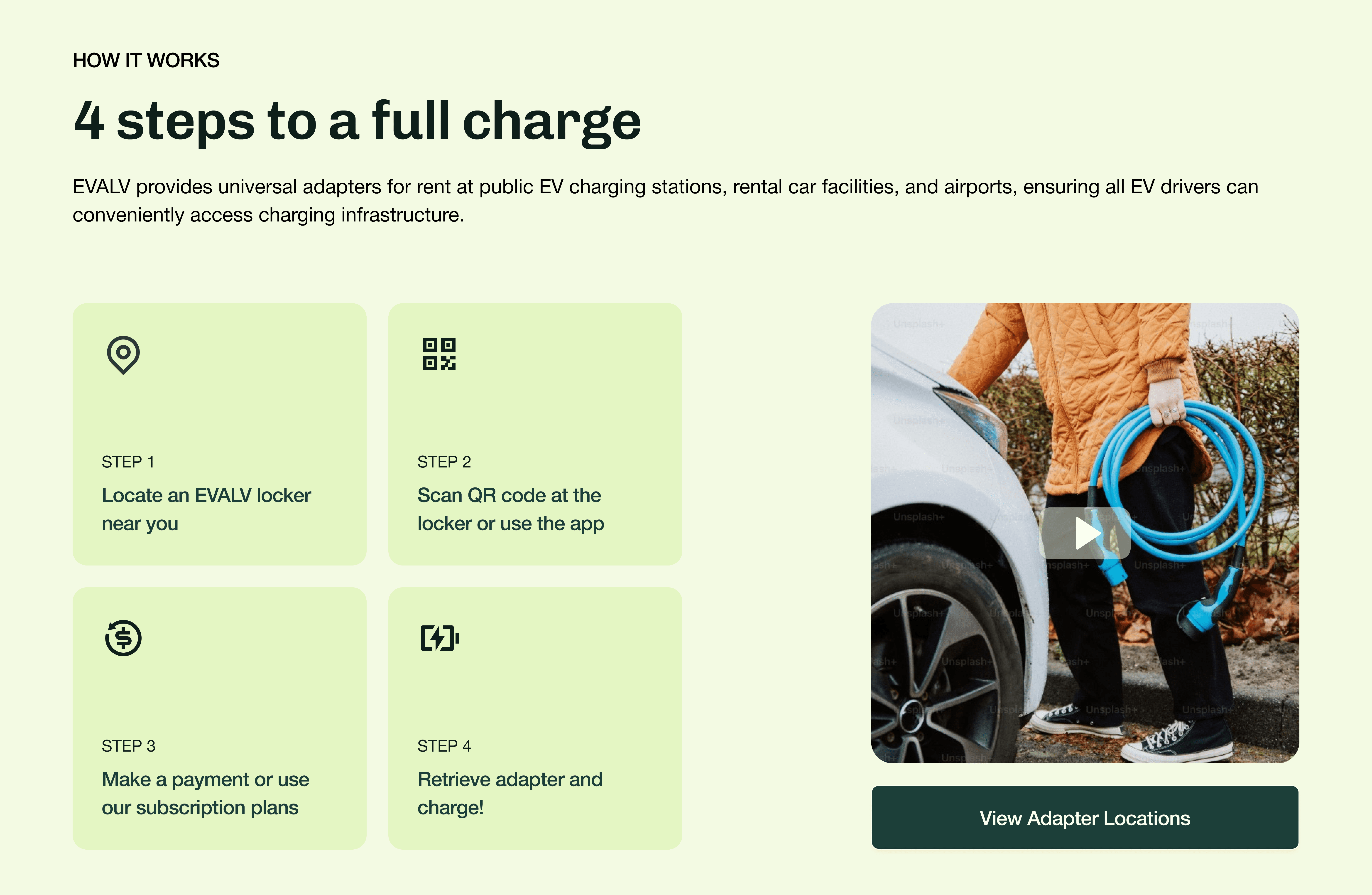
The homepage introduces the system through a simple narrative showing how drivers locate, rent, and return adapters.
Map-driven discovery
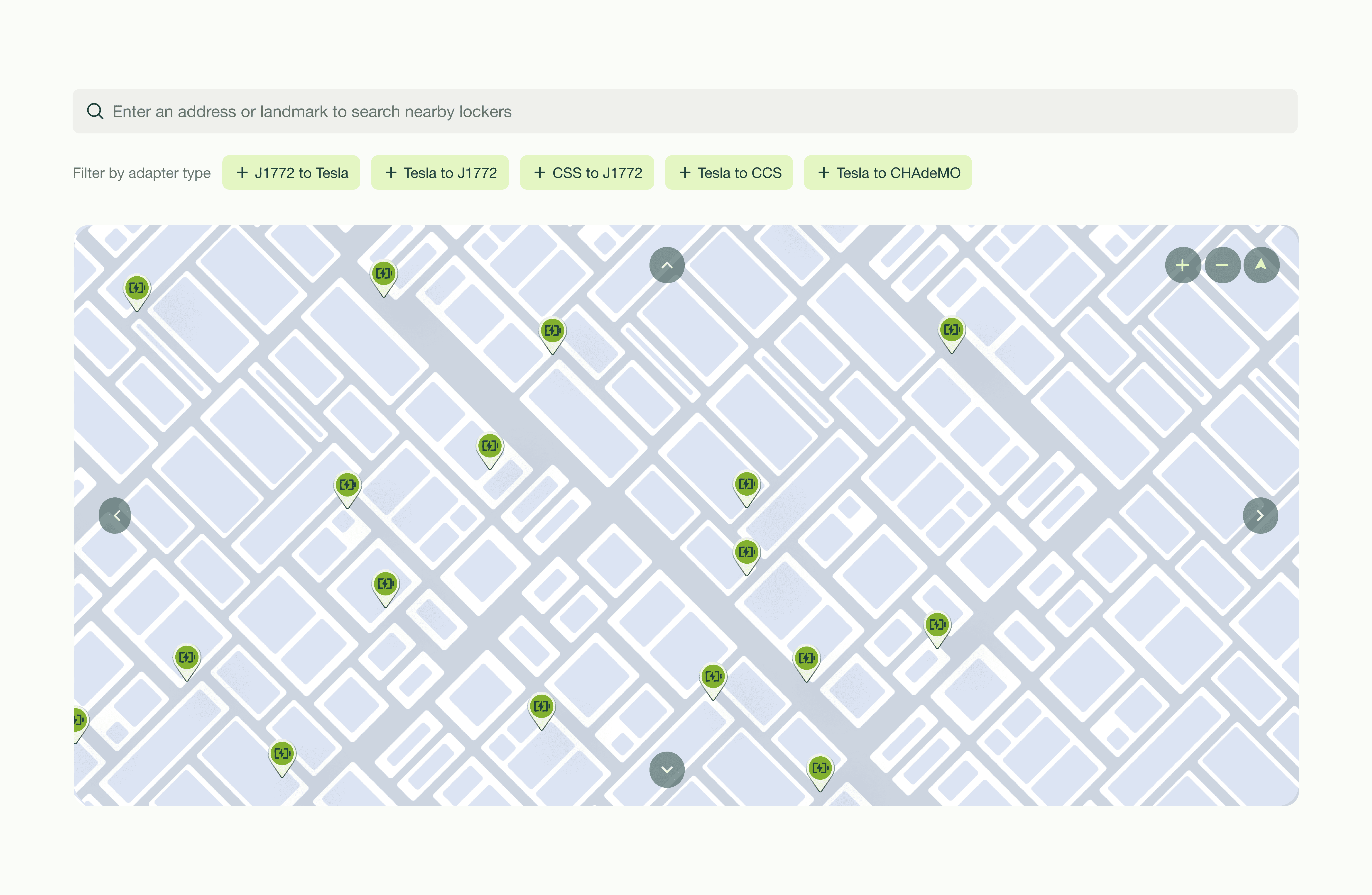
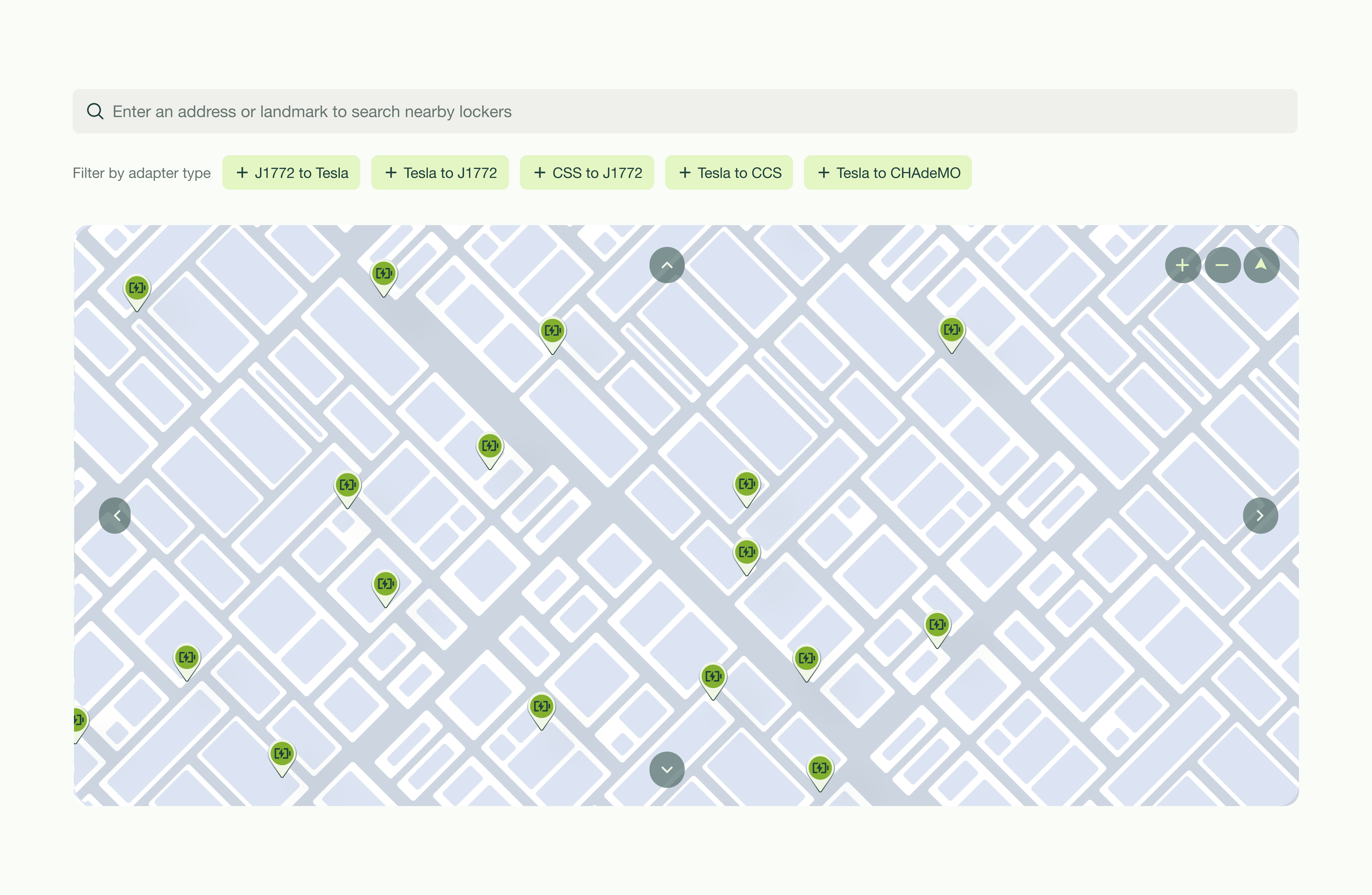
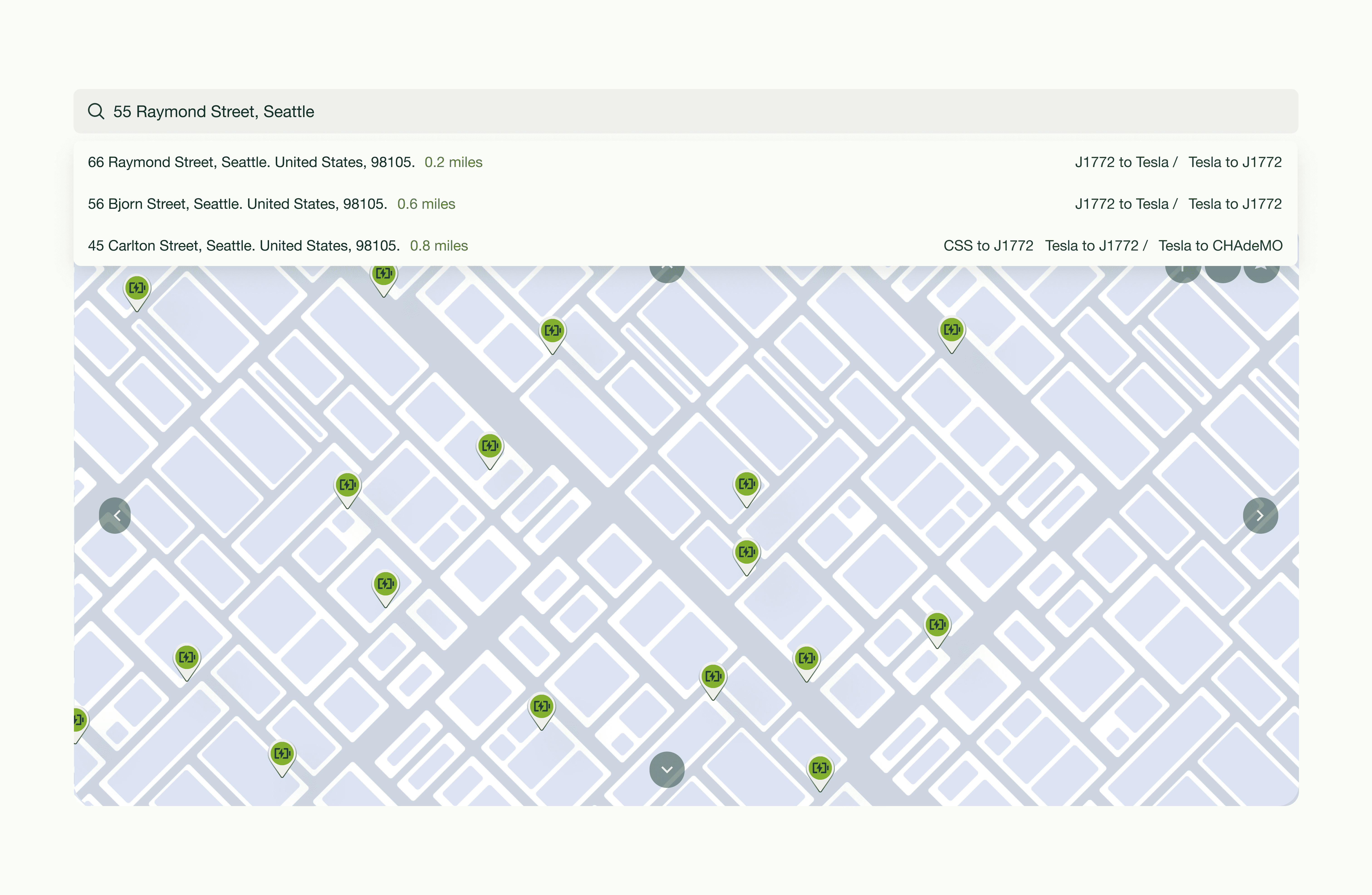
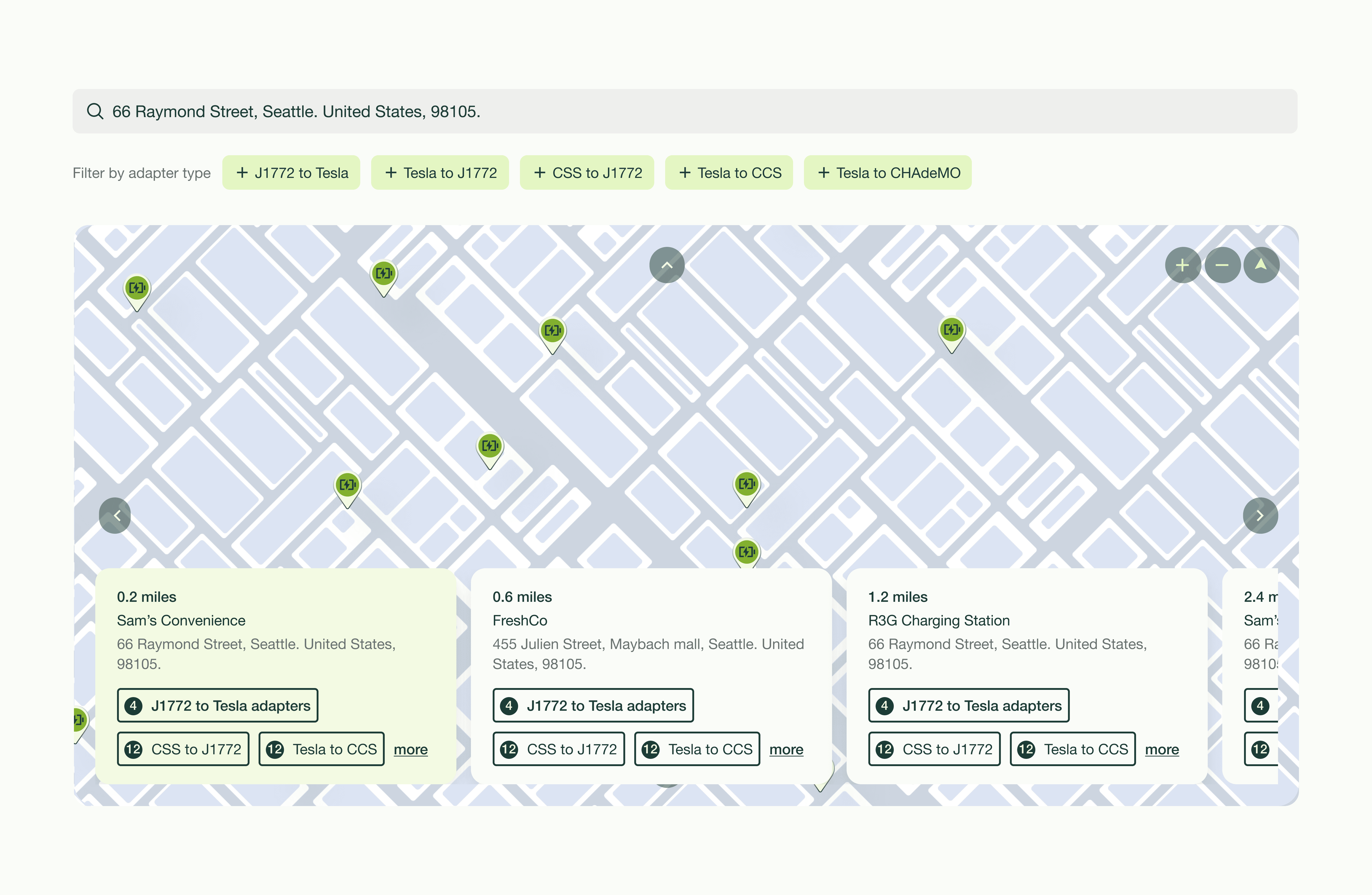
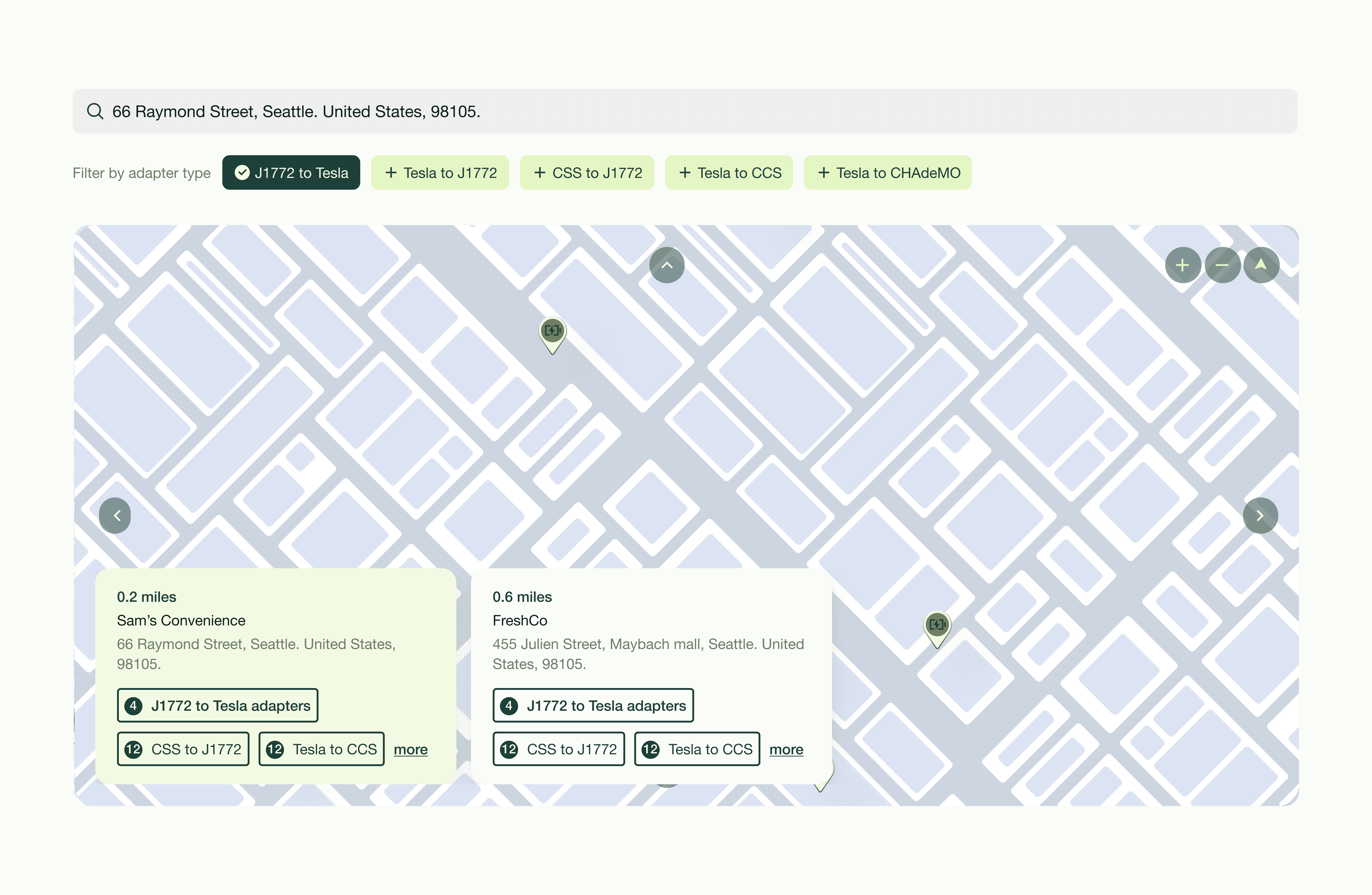
Charging locations are visualized through an interactive map to help drivers understand where the service exists.
Clear action points
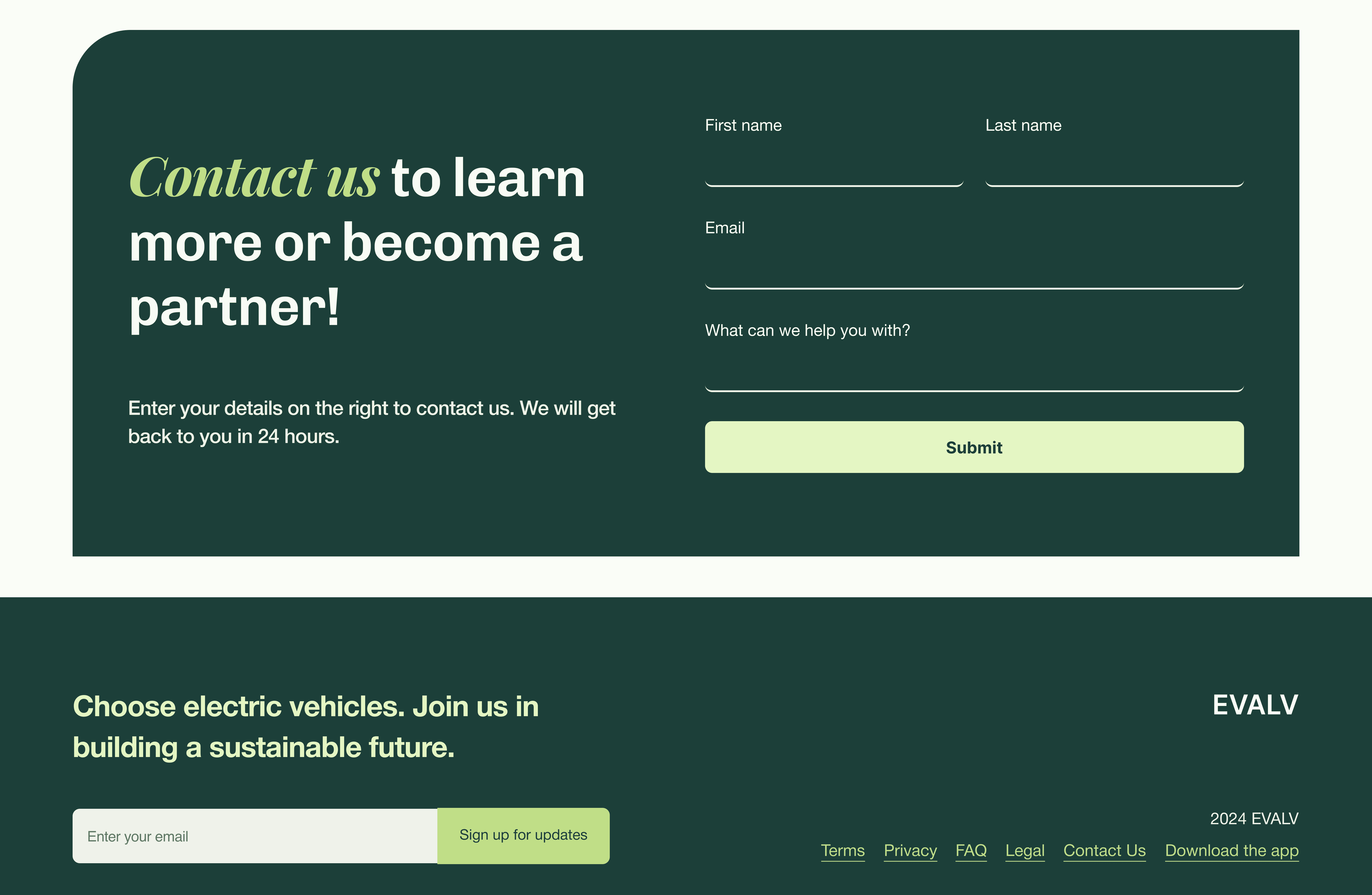
Calls to action encourage users to learn more, explore locations, or contact Evalv for partnership opportunities.
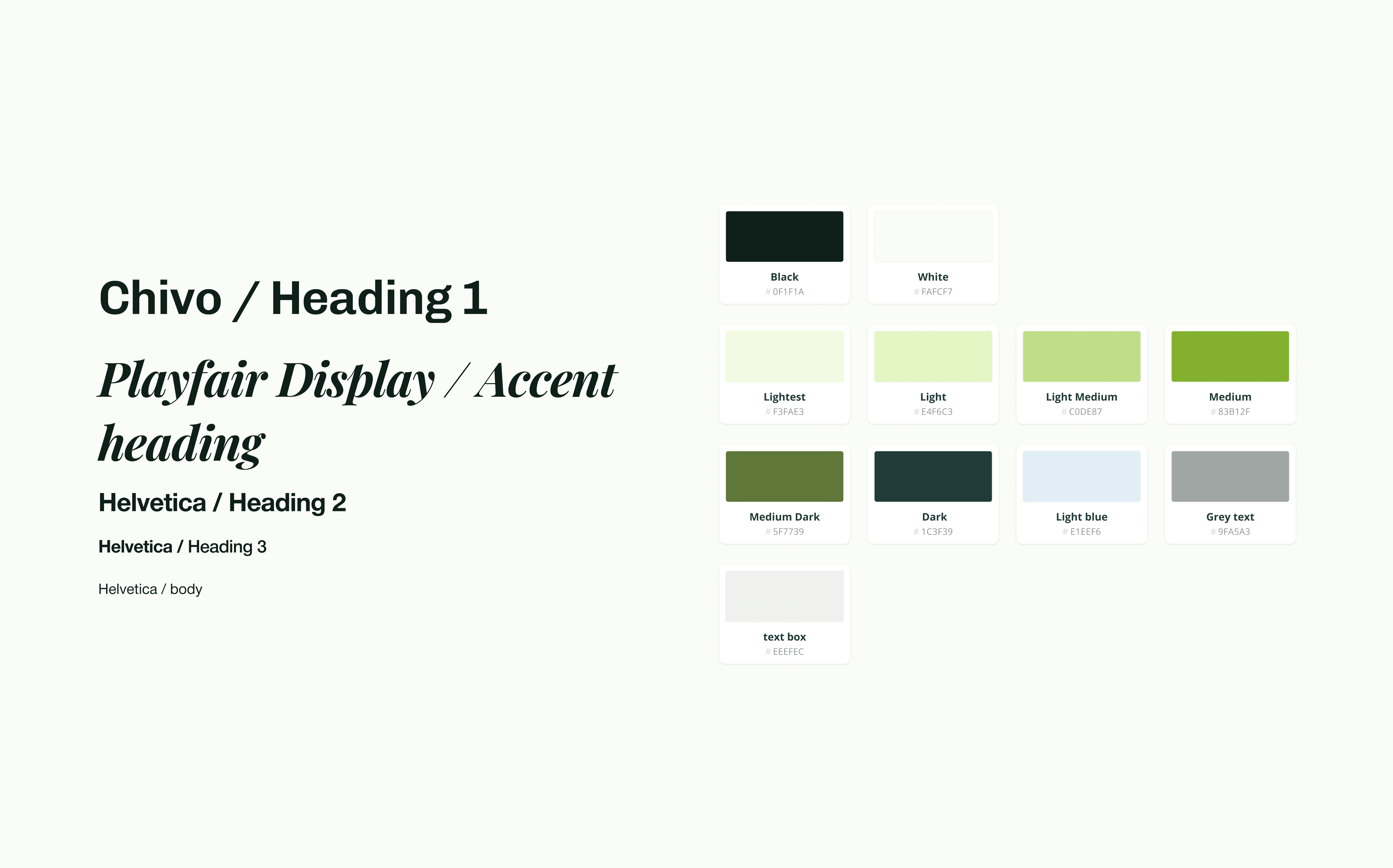
These interaction decisions were supported by a visual system designed to make the experience feel cohesive, readable, and credible. The style guide established the typography, color palette, and foundational UI language used across the site.
Because the service model was unfamiliar, the visual and interaction design focused on making the rental process feel clear, trustworthy, and easy to follow.
Key design decisions included:
Step-based explanation:
The homepage introduces the system through a simple narrative showing how drivers locate, rent, and return adapters.
Map-driven discovery
Charging locations are visualized through an interactive map to help drivers understand where the service exists.
Clear action points
Calls to action encourage users to learn more, explore locations, or contact Evalv for partnership opportunities.
These interaction decisions were supported by a visual system designed to make the experience feel cohesive, readable, and credible. The style guide established the typography, color palette, and foundational UI language used across the site.
Style Guide
Style Guide
Final Product Experience
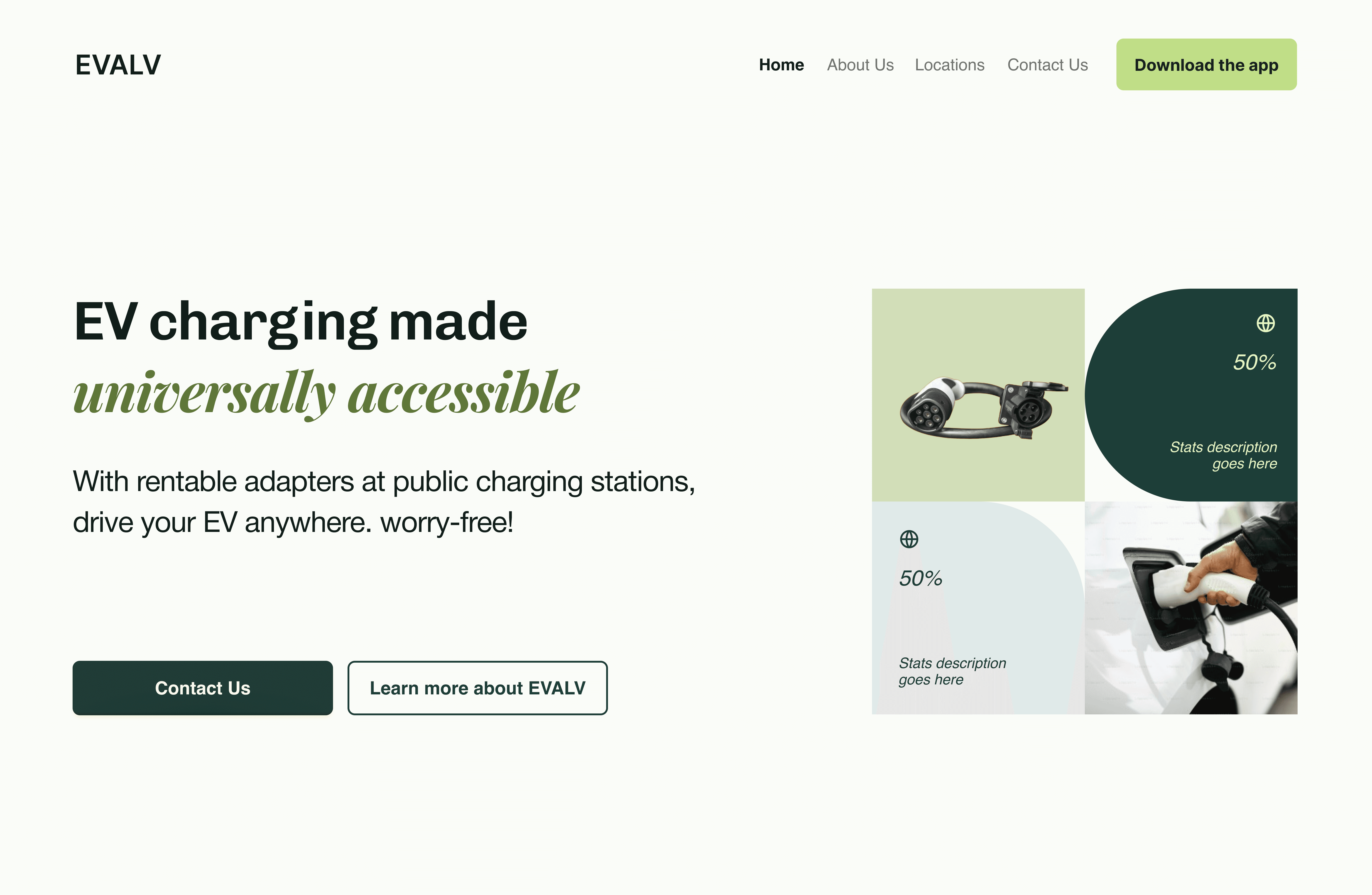
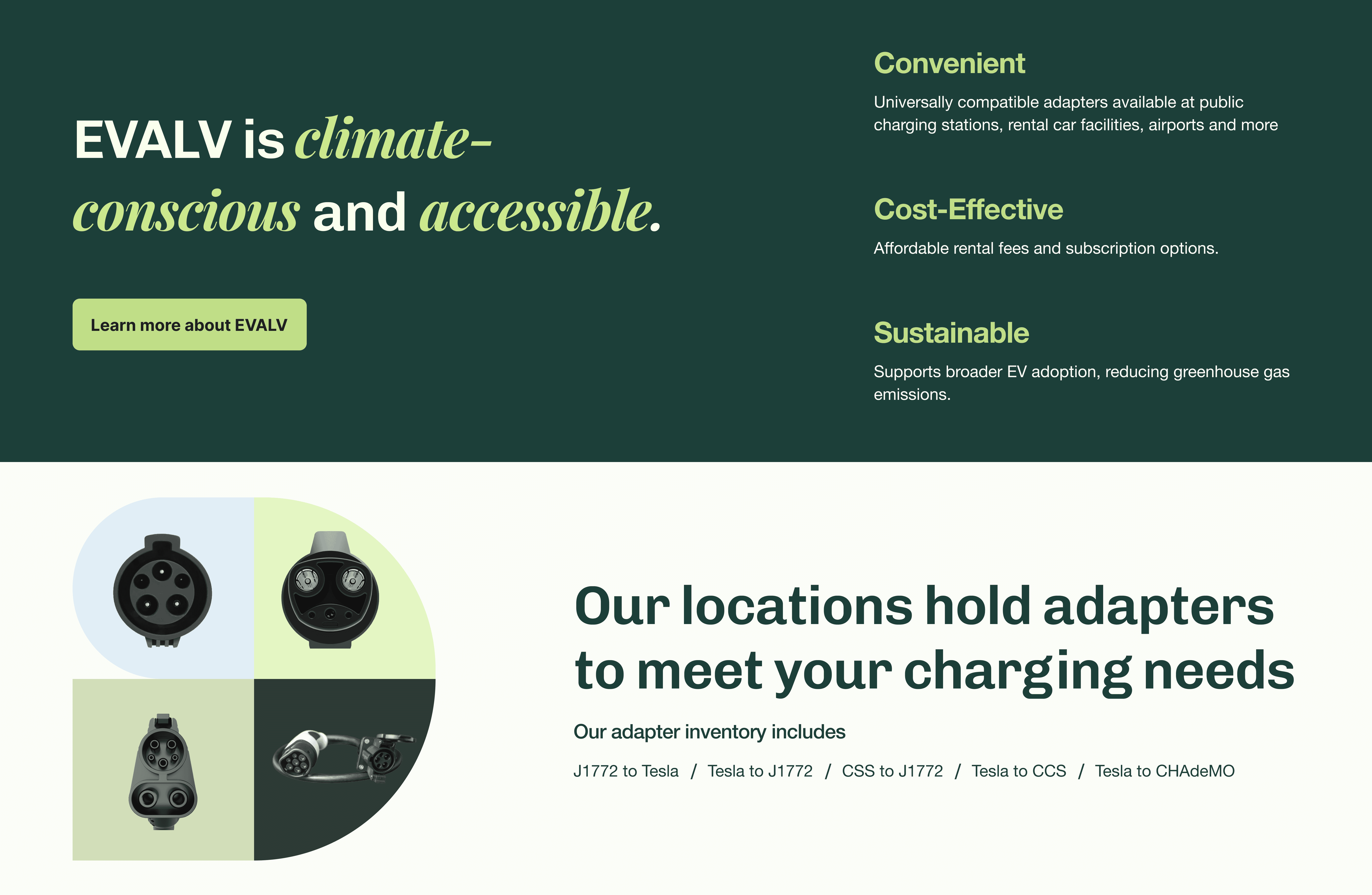
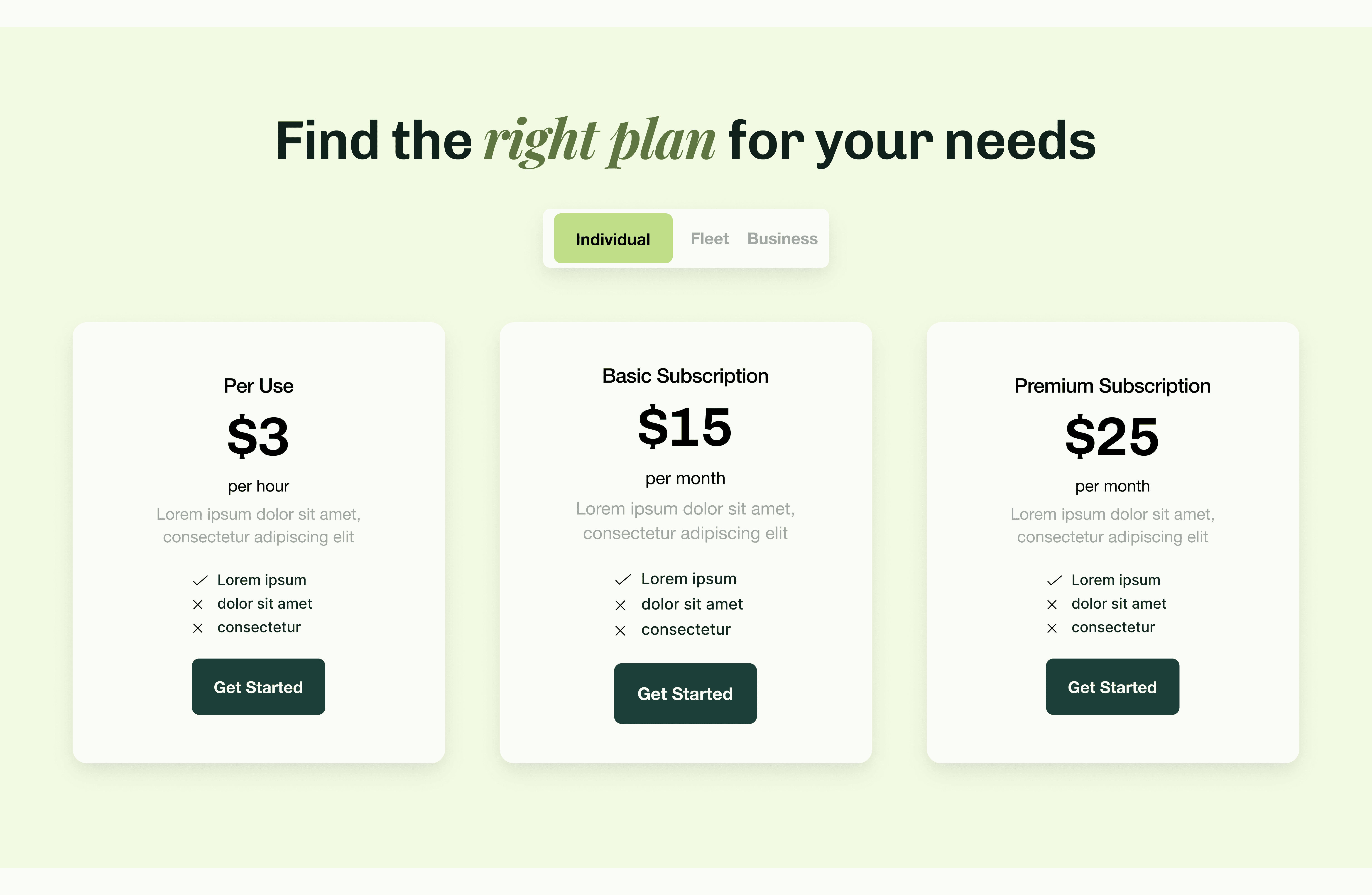
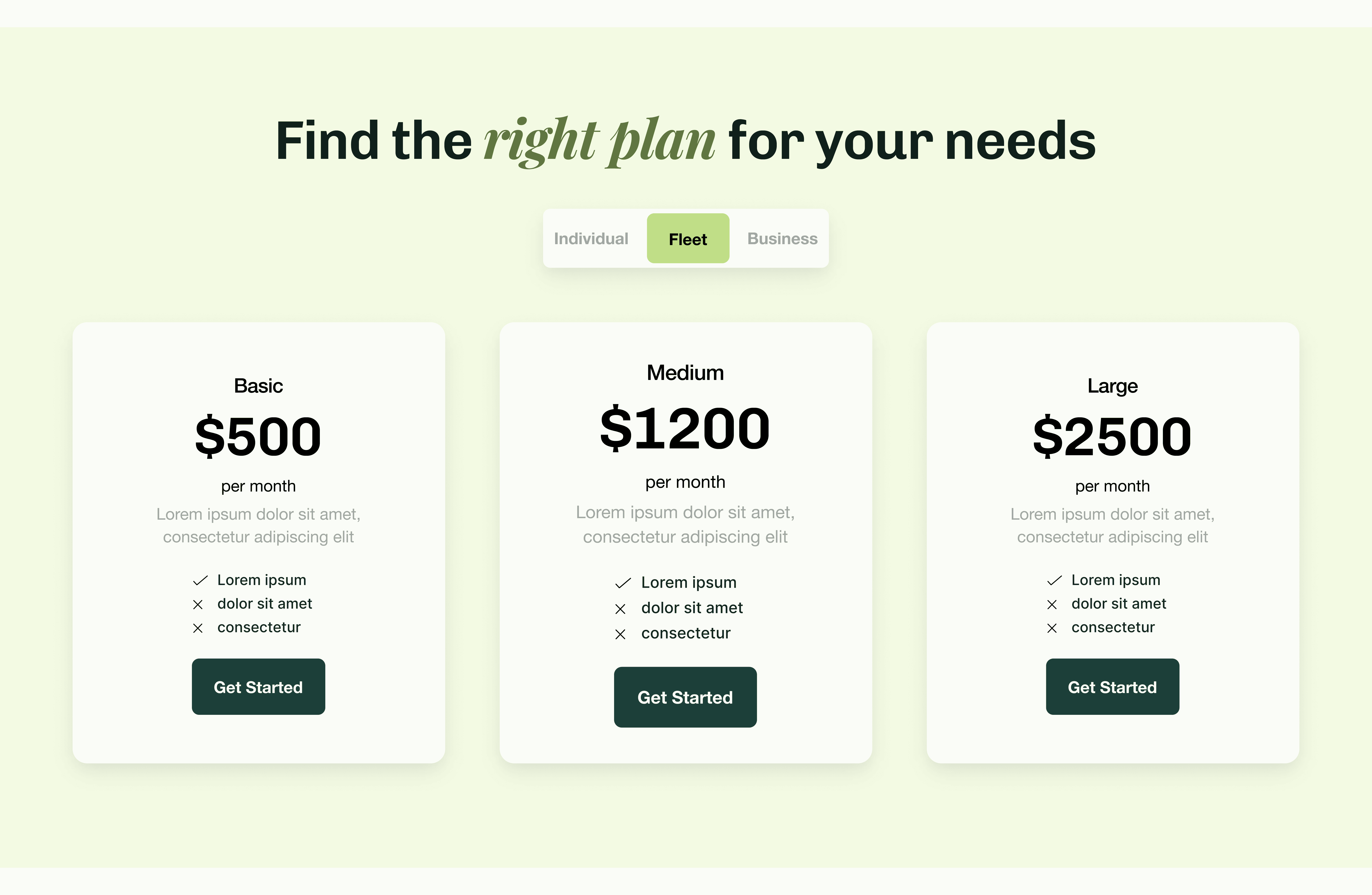
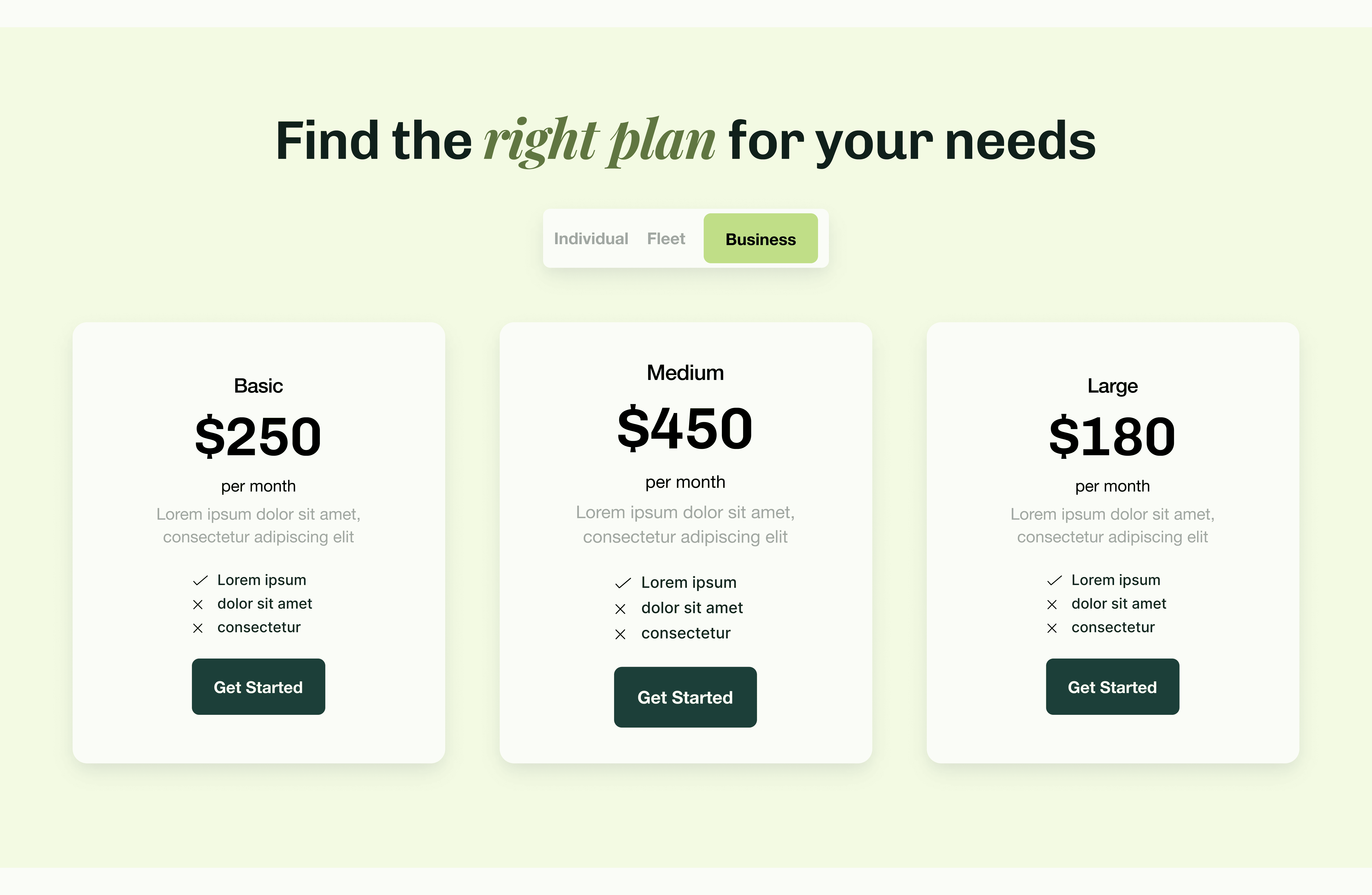
The final designs translated Evalv’s service model into a clear, consumer-facing experience that explains the value of on-demand adapter rentals, guides users through how the system works, and supports exploration through locations, pricing, and contact pathways.
The final designs translated Evalv’s service model into a clear, consumer-facing experience that explains the value of on-demand adapter rentals, guides users through how the system works, and supports exploration through locations, pricing, and contact pathways.




Where This Landed
Live
The project resulted in Evalv’s first cohesive digital presence.
The website helped:
Made the adapter rental model easier to understand
Aligned user pain points with the service offering
Support early conversations with partners and investors
The project resulted in Evalv’s first cohesive digital presence.
The website helped:
Made the adapter rental model easier to understand
Aligned user pain points with the service offering
Support early conversations with partners and investors
The project resulted in Evalv’s first cohesive digital presence.
The website helped:
Made the adapter rental model easier to understand
Aligned user pain points with the service offering
Support early conversations with partners and investors
Takeaway
Designing for emerging systems often means helping people understand something that does not yet exist in their daily lives.
The challenge was not just designing pages, but translating an unfamiliar service model into something intuitive and trustworthy.
Designing for emerging systems often means helping people understand something that does not yet exist in their daily lives.
The challenge was not just designing pages, but translating an unfamiliar service model into something intuitive and trustworthy.